




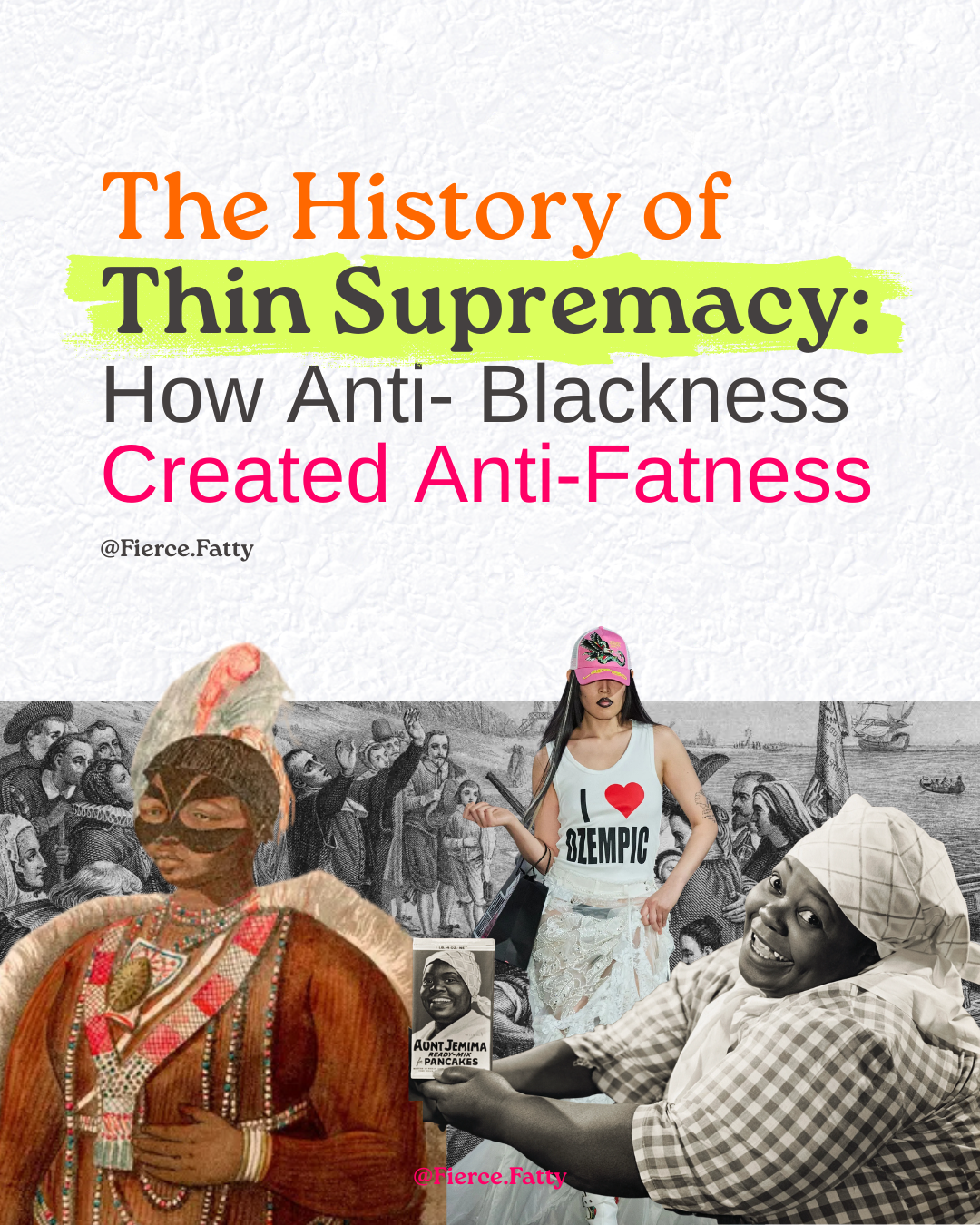
For many of us, the story we've been told about fat bodies seems pretty logical: being fat is unhealthy. We know that society stigmatizes fat people because they “choose to be fat” and “drain public resources.” Others who view body diversity more favourably would argue that it’s not the fault of people in bigger bodies that they are the way they are (because fatness is a “disease”), but it’s still important to be healthy, i.e. in a smaller body. We are taught that concerns about weight are rooted in science, medicine, and a desire to improve individual and population health outcomes.
Anti-fatness didn’t begin with medicine. In reality, the beliefs that fat people are unhealthy as well as lazy, unintelligent, undisciplined, unattractive or less worthy have deep roots in religion, the enslavement of Black bodies, colonialism, “scientific” racism, sexism and social control. It was never about health.