
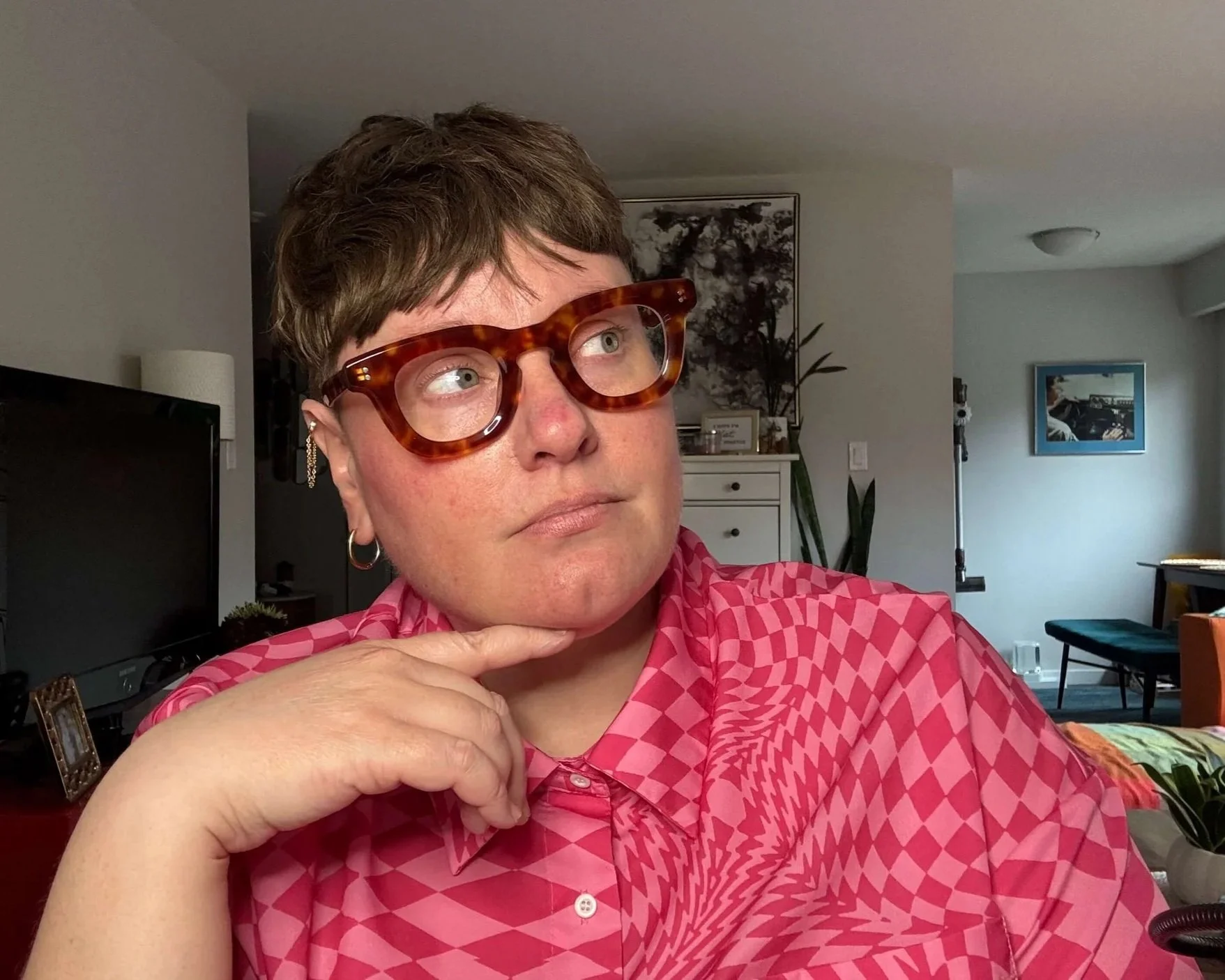
A recent opinion video from The New York Times titled “Confessions of a Former Body Positivity Influencer” claims to expose the dangers of the body positivity movement. But does it actually represent what body positivity (and fat liberation) have historically stood for? Short answer: nope. In this episode, we watch the video in real time and break down the misinformation and subtle (and not-so-subtle) ways anti-fatness is repackaged as just “caring about your health.”
TW: anti-fat beliefs.
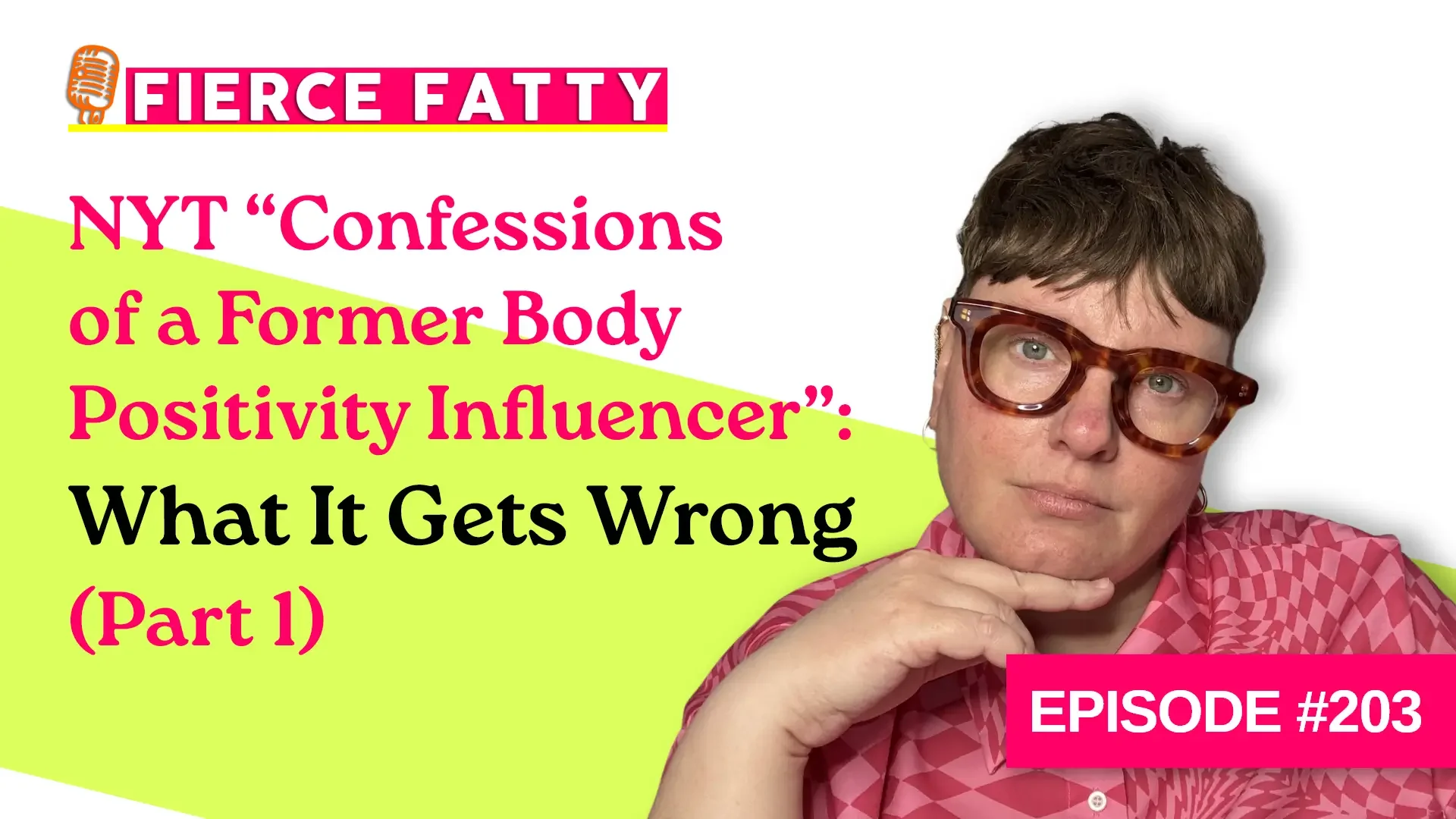
I made a whole 2 part podcast on this topic! If you’d like to dive deep and see me react to the NYT video live then check out episode 203: NYT “Confessions of a Former Body Positivity Influencer”: What It Gets Wrong and part 2 here.
Is the Fat Liberation Community Anti-Health? Myths and Misconceptions
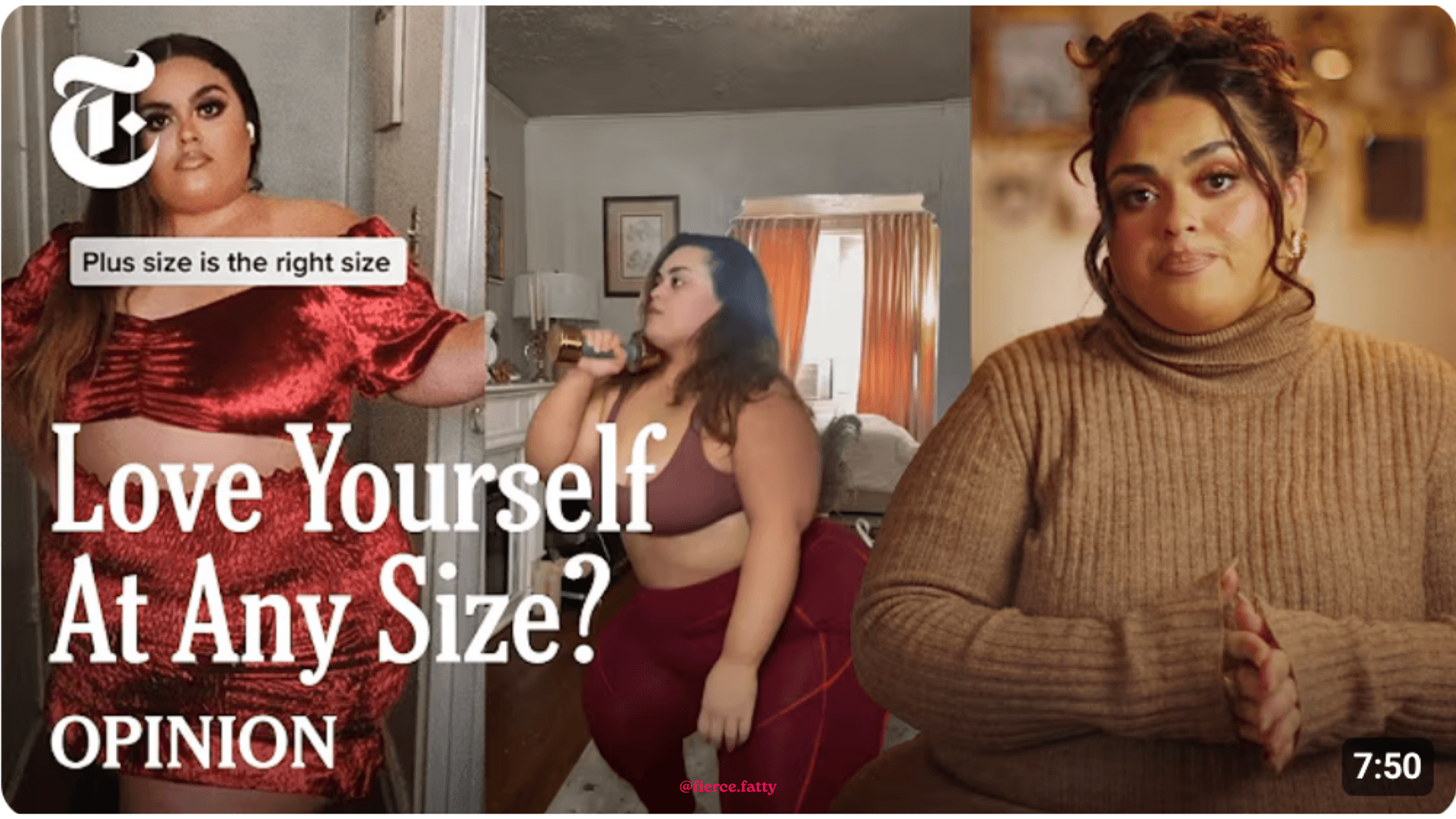
The New York Times released an opinion video titled “Confessions of a Former Body Positivity Influencer.” It has over 600K views and climbing and claims to expose the dangers of body positivity, and by extension, the fat liberation community. Unfortunately, there are multiple issues with the claims made, and for those who are beginning to unlearn anti-fatness and diet culture, it could be detrimental to those journeys. So let’s break down some common myths about body positivity and fat liberation.
Misconception: “Real” body positivity should mean loving your body and losing weight if you want to.
Reality: Body positivity and weight loss are separate concepts.
The term body positivity was popularized in 1996 when The Body Positive, a not-for-profit organization, was formed. Their goal was to support people with eating disorders and oppressive societal messages around beauty. Their work was spawned from the decades of efforts from the fat liberation community. NAAFA was formed in 1969 to obtain equal rights, access and opportunities for fat people.
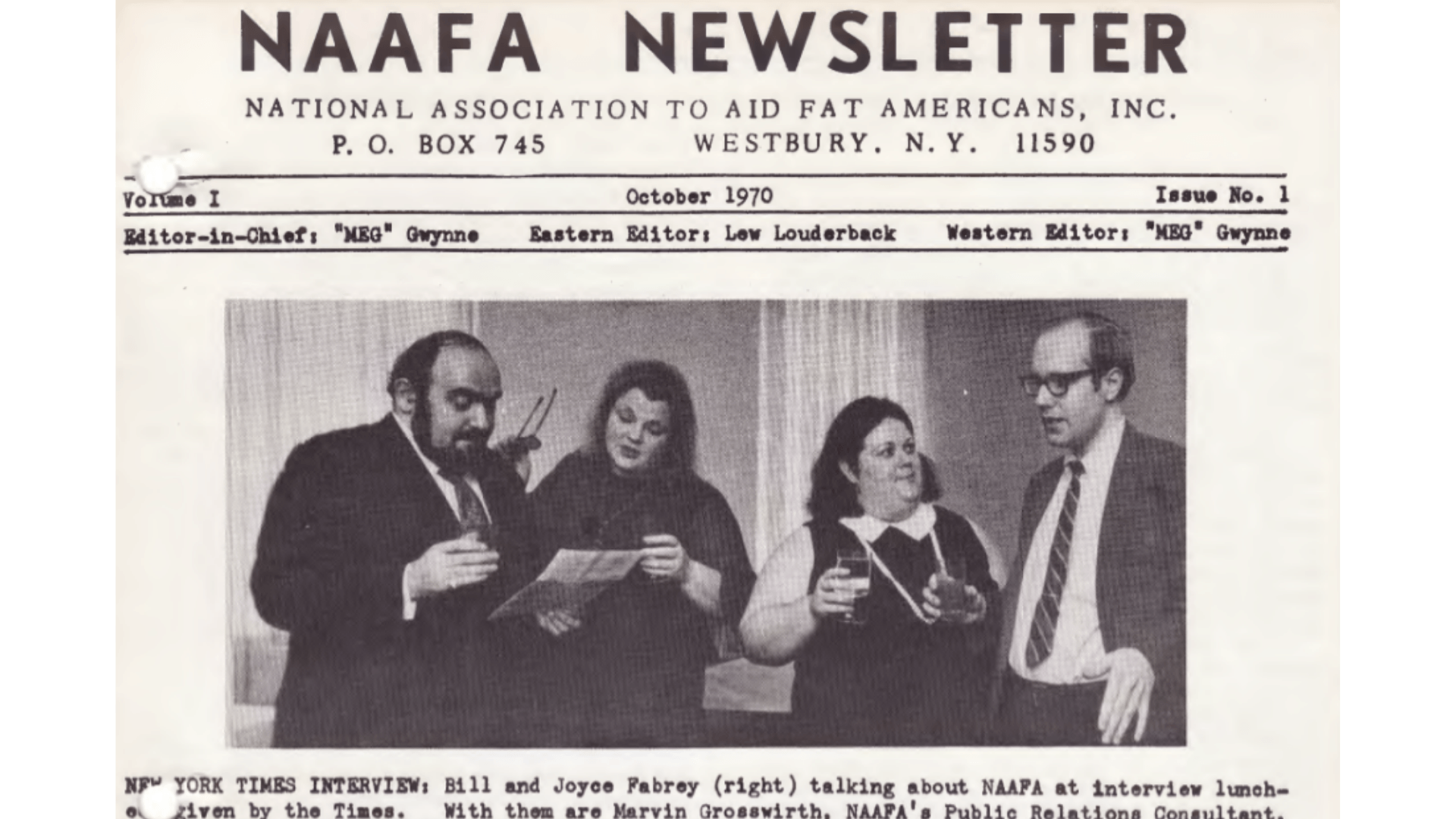
Both The Body Positive and NAAFA have worked to dismantle systems of oppression.
In the 2010s, the term body positivity was co-opted by advertisers as a way to sell products (think Dove’s Real Beauty campaign) and moved from centring marginalized voices to those with the most body privilege. The movement was “sanitized,” slimmed down, made white, and its radical roots dismissed. It shifted the focus to appearances, fluffy-feel-good influencer content and concentrated on the individual.
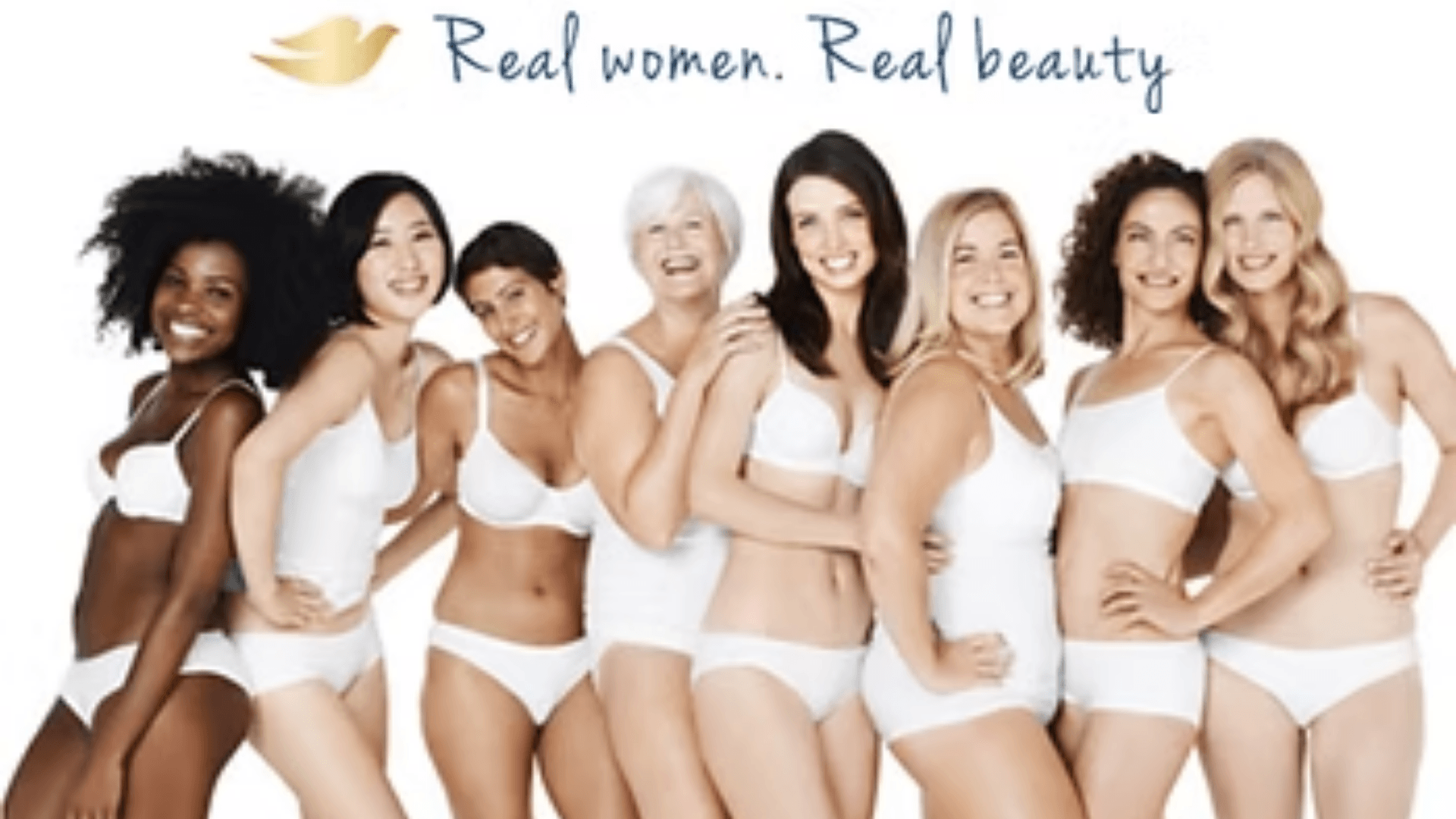
“Real” body positivity (or rather, the more accurate term, fat liberation) means working towards the equal rights of fat and dismantling narratives that frame fat bodies as wrong.
Saying that a framework that was created to support those to survive anti-fatness and diet culture should include dieting/weight loss in its definition is logically inconsistent.
Misconception: Body positivity/fat liberation is anti-health.
Reality: As we established, fat liberation* is about seeking equal access for people of all body sizes. That also means access to healthcare.
Health at Every Size (HAES) advocates for health interventions to be provided to people no matter their size.
Another common misconception is that the term HAES claims that every fat person can or is healthy, no matter their size. This is incorrect. Not all fat people can be healthy (same as straight-sized people), but all fat people should be able to access healthcare.
*I’ll refer to the concept of “body positivity” as fat lib from here on out, as the critiques are levelled at concepts of fat lib.

Misconception: Fat liberation denies that fat people are at higher risk for certain health outcomes.
Reality: That’s incorrect. In fact, the data showing that fat people can have worse outcomes in certain circumstances is of great interest. Fat liberation doesn’t deny it exists.
Currently, we don’t have the data to show that adipose (fat) tissue causes worse health outcomes; however, we do know that other factors influence outcomes, such as 1) subpar or lack of healthcare, 2) the toll of anti-fat bias and 3) weight cycling.
Using curiosity and nuance, we can explore the worse outcomes that fat people absolutely do have at times and support the dismantling of systems, beliefs and behaviours that can cause them. As well, acknowledging that fat people can also have better outcomes at times*.
*For just one example, see the “Ob*sity” Paradox: Flegal et al., 2013, https://doi.org/10.1001/jama.2012.113905).
Misconception: Fat liberation is increasingly getting more “extreme”
Reality: The core ideas haven’t changed; fat liberation has called for dignity, equal rights, and freedom from anti-fat bias for decades.
What’s changed is that more people are hearing the message and becoming educated about how fat folks have been harmed. People are increasingly asking for the use of inclusive language and environments.
That’s a good thing and not “extreme".
*It can feel extreme to those who are used to being able to be cruel to fat folks without repercussions.
Misconception: Loving your body = weight gain = worse health = death
Reality: The slippery slope fallacy is loud and clear with this misconception.
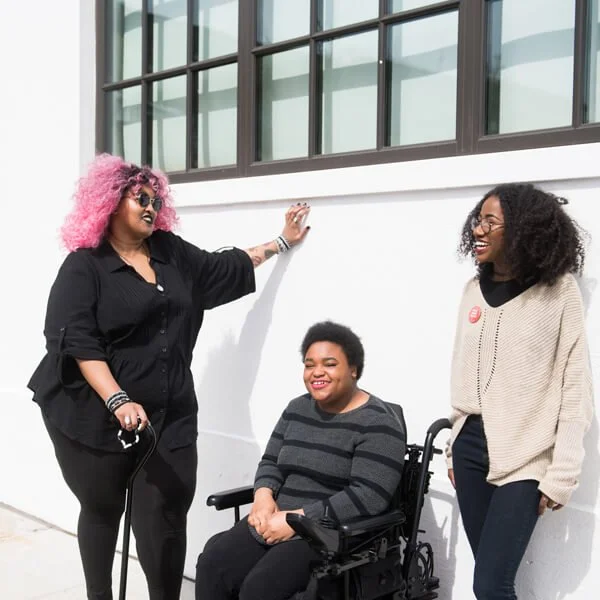
Fat liberation doesn’t say you need to love your body, but if you do, that’s great. Having self-compassion, which is what loving your body means, enables people to make decisions that are best for their needs, which may include health or not. Health outcomes/behaviours and body weight are not the same thing.
It is inaccurate/anti-fat to assume:
1) self-compassion = weight gain,
2) weight gain is always bad,
3) fatness equals being unhealthy, followed by becoming unalive
This argument also frames health as a moral issue.
Misconception: Any type of weight loss is anti-fat
Reality: Fat liberation critiques systems that pressure people to lose weight or treat fat bodies as inferior.
People lose and gain weight for many reasons.
– Sometimes those reasons are because an anti-fat society is coercive (e.g. gender affirmation surgery is denied unless that person loses weight).
– Sometimes people seek weight loss as they have anti-fat beliefs they have yet to explore (e.g. they believe they are more worthy/attractive/good if they are thin).
– Sometimes people want to experience increased access and privilege (e.g. being able to physically fit somewhere).
Because we live in an anti-fat society, it can be incredibly hard to make decisions free from its influence (especially around body size). Whatever an individual does to survive anti-fatness is none of my business. It's the systems that are wrong that tell us that fatness is inherently immoral.
Misconception: Fat liberation attacks people for losing weight
Reality: Fat liberation is not focused on critiquing individuals making personal choices, but systems and messaging that promote thinness as the standard of worth.
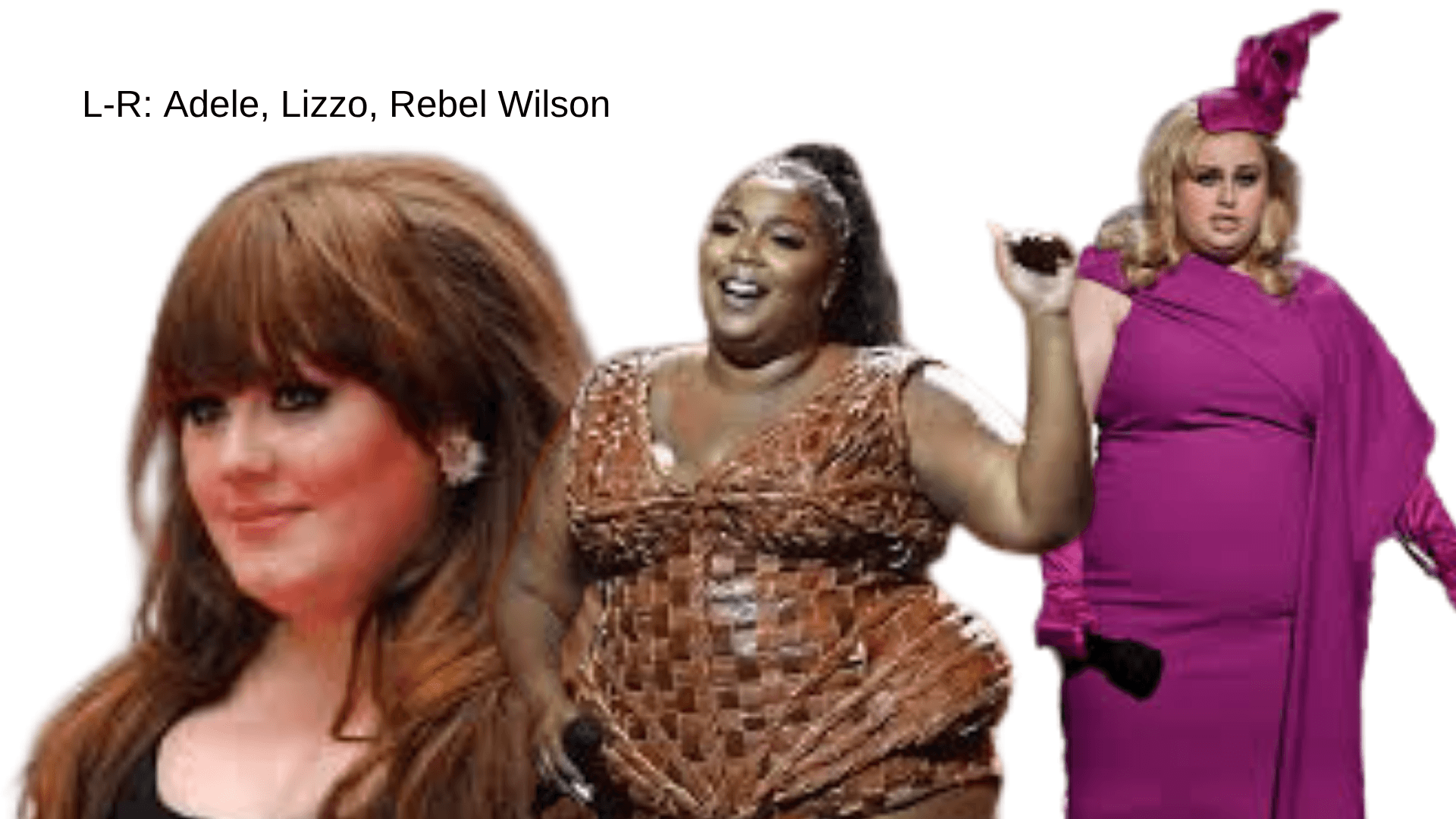
When a famous person/influencer who previously celebrated fatness loses weight, their fans and followers can be confused, sad and sometimes angry. Those feelings are not normally about the actual weight loss, but in the perceived change in values, the “bait and switch” that seems to have happened.
Many people feel like they have been gaslit as they looked up to someone as living their same values, and seemingly overnight, there is a 180. It’s normal to have big emotions when that happens. Are there people online who attack those who lose weight? Absolutely. Ding-dongs exist in every movement. But that’s not a mandate of fat liberation.
This is important, here’s where we can do better:
We must never assume that an influencer/celeb does actually share our values unless they clearly tell us. Just because someone is fat doesn’t mean they support fat liberation. Sometimes fat folks can be incredibly anti-fat, I know I used to be!
Misconception: It’s “fatphobic to care about your health”
Reality: It’s not anti-fat to care about your health. What IS anti-fat, presuming fat people don’t care about health - the biggest tired trope we see about fat people.
If someone is interested in pursuing health goals, great. If someone chooses not to focus on that, that’s a morally equivalent decision. Health and weight are separate concepts. You can be straight-sized and healthy or unhealthy and vice versa for fat.
The issue is when someone claims that the only way for a fat person to be healthy is to turn into a thin person. Many fat people engage in health-promoting behaviours.
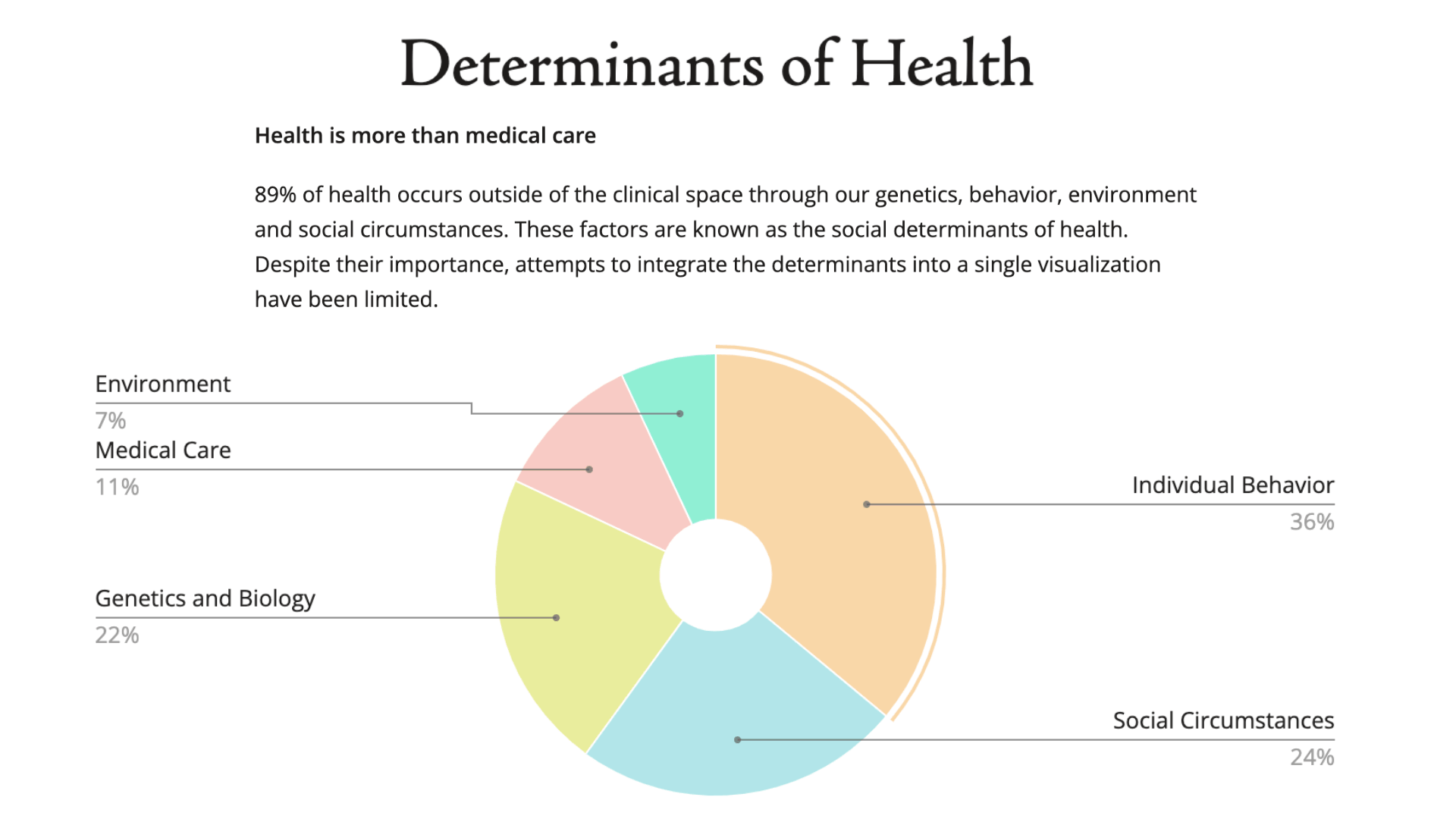
Health is a complex topic, and there are many facets to consider, including the social determinants of health, which demonstrate that “health” can also include things like access to clean water, wearing a seat belt, your socioeconomic status and much, much more.
Which of these misconceptions about fat liberation do you want to see disappear? What other misconceptions frustrate you?
About the Author:

Vinny Welsby (they/them) is a fat activist, diversity, equity and inclusion leader and founder of Fierce Fatty and Weight Inclusive Consulting. They have been a leading voice in dismantling anti-fat bias and diet culture for over a decade, a TEDx speaker, a podcast host, and a master's student in psychotherapy. Vinny is trans-non-binary and is dedicated to shifting how society views fat and queer bodies through education and compassion.
When Vinny isn’t talking about DEI stuff, they love snuggling with their dog, cross-stitching swear words and singing in a pop choir.
Follow Vinny on Instagram, Facebook or LinkedIn or get their free resources the Body Love Roadmap or How to Make Your Workplace Size Inclusive (or check out many other free resources here).